Freedom of Expression: First Amendment Rights and Their Evolution Over Time
Introduction
In 1735, John Peter Zenger, printer of the New-York Weekly Journal, was found not guilty of publishing seditious libel by a jury of his peers. While Crown v. John Peter Zenger did not necessarily establish a legal precedent, it exemplified a distinct, foundational American ideal: freedom of expression. The core premise of freedom of expression is that neither federal nor state governments have the authority to prohibit free exercise of religion, censor “the press,” or restrict assembly of people. Admittedly, freedom of expression is not all-encompassing; jurists have developed categories for “protected” and “unprotected” expression, and the purpose of this section is not to assess the validity of these categories. Rather, it is to identify consistent abridgements of freedom of expression across U.S. history, abridgements that make it an ideal rather than a complete reality. Although tenets of freedom of expression, such as protection of dissent, are protected in theory, they have and continue to be restricted in practice, particularly for non-majorities perceived as threats to political or social order.
Origins of Free Expression
Excerpt from the Sedition Act of 1798
And be it farther enacted, That if any person shall write, print, utter or publish...any false, scandalous and malicious writing or writings against the government of the United States, or either house of the Congress of the United States, or the President of the United States, with intent to defame the said government, or either house of the said Congress, or the said President, or to bring them, or either of them, into contempt or disrepute...then such person, being thereof convicted before any court of the United States having jurisdiction thereof, shall be punished by a fine not exceeding two thousand dollars, and by imprisonment not exceeding two years.
The early republic codified legal protections for freedom of expression in the Bill of Rights. However, relatively immediate federal suppression of dissent demonstrated that political conformity was prioritized over free speech. The First Amendment explicitly prohibited Congress from “abridging the freedom of speech, or of the press.” Yet, in 1798, a quasi-war with France emerged, prompting a Federalist-controlled Congress to enact laws that penalized dissenters of the conflict (Alien and Sedition Acts).
Specifically, Congress enacted the Alien and Sedition Acts, which are widely regarded as inconsistent with the First Amendment and thus unconstitutional. The Alien Act increased residency requirements for citizenship and authorized arrest, imprisonment, and wartime deportation of “aliens,” while the Sedition Act criminalized seditious speech about the federal government (Alien and Sedition Acts). The prosecution of Democratic-Republican newspapers under the Sedition Act reveals a pattern in which civil liberties such as free speech are suppressed during wartime, exposing the limits of freedom of expression.
The Virginia and Kentucky Resolutions, drafted by Thomas Jefferson and James Madison, respectively, were early instances of resistance to violations of free speech posed by the Alien and Sedition Acts. These resolutions attempted to assert states' rights as a limit on federal power. However, the resolutions received no support from any of the other fourteen states and thus had a limited direct impact. This suggests that even with significant political opposition to violations of First Amendment rights, restrictions on freedom of expression can occur when imposed by a dominant political group.
Myth: Freedom of Expression vs. Reality
Destruction by Fire of Pennsylvania Hall. On the Night of the 17th May, 1838.
By John T. Bowen

State-sanctioned violence—through mobs, local governments, and the military—suppressed free expression for many marginalized groups, particularly abolitionists, unionists, and Indigenous Americans. For instance, the Anti-Slavery Convention of American Women of 1838 was held at the Pennsylvania Hall on Tuesday, May 15. Two days later, a mob of around 10,000 people burned the building down, as depicted in the image above (Bowen). There were no successful prosecutions against the rioters, and local authorities, namely Mayor John Swift, refused to protect the lawful speech and assembly practiced by the women at the convention (Bowen). This highlights an early limitation of free expression: although the Bill of Rights contained provisions to protect free speech, such laws applied only to federal action, thereby permitting state and private actors to bypass constitutional issues concerning state complicity with denials of free speech.
Rutherford B. Hayes Diary entry, August 5, 1877
"The strikes have been put down by force; but now for the real remedy. Can't something [be] done by education of the strikers, by judicious control of the capitalists, by wise general policy to end or diminish the evil? The railroad strikers, as a rule, are good men, sober, intelligent, and industrious. The mischiefs are: —
- Strikers prevent men willing to work from doing so.
- They seize and hold the property of their employers.
- The consequent excitement furnishes an opportunity for the dangerous criminal classes to destroy life and property.
Now, "every man has a right, if he sees fit to, to quarrel with his own bread and butter, but he has no right to quarrel with the bread and butter of other people." Every man has a right to determine for himself the value of his own labor, but he has no right to determine for other men the value of their labor. (Not good.)
Every man has a right to refuse to work if the wages don't suit him, but he has no right to prevent others from working if they are suited with the wages." (Hayes)
During the Great Railroad Strike of 1877, laborers across the country organized strikes, protests, and mass gatherings to challenge low wages and working conditions. In several cities, state militias and federal troops were deployed to break the strikes, disperse crowds, and restore rail operations. Local authorities, including Philadelphia Mayor William Stokely, temporarily issued blanket bans on "assembling and organizing together for discussion or otherwise..." (Dacus). Contemporary courts were deferential to such decisions and viewed them as proactive, even though they prohibited peaceful gatherings without reason. While many strikes did devolve into violence, these preemptive crackdowns on peaceful assembly highlighted a legal gap that later constitutional doctrine would close. This historical overreach foreshadowed the eventual "incorporation" of the First Amendment to the states and the modern restriction of prior restraint against lawful protest.
In addition to state complicity with the suppression of free expression, the actions of the U.S. military went against constitutional principles during the Wounded Knee Massacre. In 1890, on a South Dakota reservation, soldiers from the Seventh U.S. Cavalry Regiment arrested a group of Lakota people near Wounded Knee Creek to suppress the growing Ghost Dance religion. In an attempt to recover weapons from the refugees, the soldiers eventually opened fire on the group, killing hundreds of men, women, and children (Disaster at Wounded Knee). No U.S. Army personnel were prosecuted for the massacre, and Colonel James Forsyth, the commander of the Seventh Cavalry, was allowed to regain command. Although many Lakota people were not U.S. citizens and thus not protected by the First Amendment, government repression of the religion contradicted the ideals of the free exercise clause, ideals that many people believed should be applied regardless of citizenship. This event underscores how, even without direct legal protection, the broader ideals of the First Amendment were continually sidelined in favor of political or military agendas.
Violations and Reinterpretations of Free Expression
Judicial decisions and social movements gradually expanded protections for free expression, though these expansions remained constrained by evolving concerns over security, order, and new forms of regulation. Charles Schenck, for example, was convicted of violating the Espionage Act of 1917 because he mailed pamphlets that criticized U.S. involvement in World War I. He appealed to the Supreme Court, arguing that the act violated his First Amendment right of free expression. The Court ruled against him in Schenck v. United States (1919), asserting that Schenck's actions created a "clear and present danger" that could impede the war effort (Schenck v. United States). As earlier, the Court's decision demonstrates that civil liberties could be sidelined when incongruous with military objectives, but the new "clear and present danger" standard gave judges broader discretion to curtail free expression. Expansions of free expression did occur, however; the Court "incorporated" the First Amendment to apply to states in Gitlow v. New York (1925), a decision intended to protect free expression from federal and state infringement. Still, perceived threats to national security allowed freedom of expression to be restricted for unpopular minorities, particularly during the 1950s Red Scare and Civil Rights Movement.
McCarthyism, the practice of publicly accusing government officials of subversive activities, fostered an ideological environment that limited First Amendment rights. For instance, Congress passed the McCarran Internal Security Act of 1950; consequently, government officials were allowed to deport non-citizens based on alleged political ties, and members of "subversive" groups such as the Communist Party were prohibited from federal and defense facility jobs. In 1967, the Supreme Court would later rule that (1)(a)(D) of the act, a provision that criminalized members of subversive groups for working at defense facilities, was unconstitutional for violating the right of free association (United States v. Robel). Nonetheless, significant provisions of the act and others remained, allowing government officials to punish allegedly seditious speech.
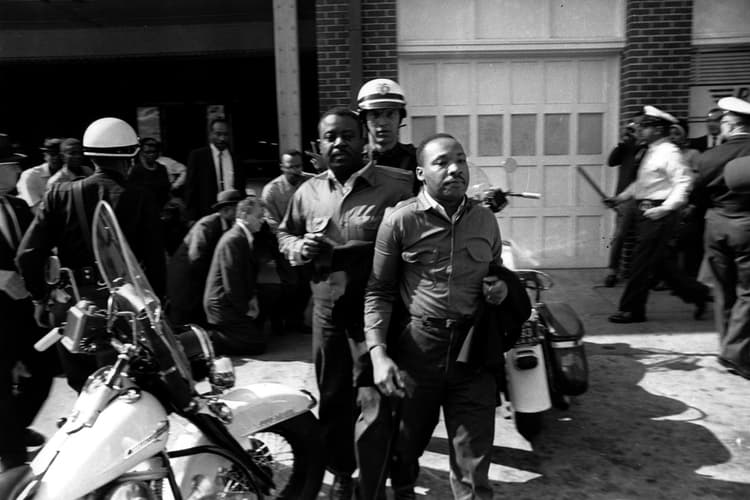
Similarly, during the 1960s, freedom of expression protections for civil rights activists were violated as well. Members of the Southern Christian Leadership Conference, notably Dr. Martin Luther King Jr., were imprisoned in Birmingham for violating an anti-protest injunction. Public Safety Commissioner Bull Connor had refused to issue permits to the activists, and the city weaponized a preemptive court injunction to prevent peaceful demonstrations. Despite the majority of the Supreme Court acknowledging the unconstitutionality of the injunction, the 5–4 Court decision in Walker v. City of Birmingham (1967) affirmed the convictions of the activists, ruling that they had to perform proper judicial procedure before violating the statute (Walker v. City of Birmingham). Mr. Chief Justice Earl Warren, along with four other justices, dissented; they argued that the officials utilized their power to deny permits to organizations whose views they disliked, and that the First Amendment overruled the local ordinance. Nevertheless, this case demonstrated that, even with the selective incorporation of the First Amendment, freedom of expression was largely limited for marginalized groups.
Conclusion
The limitations of the First Amendment excluded various populations throughout U.S. history; as a result, Court doctrine, legislation, and policy emerged to protect freedom of expression from unfettered government discretion. The Fourteenth Amendment allowed the Supreme Court to develop doctrines such as selective incorporation and protected speech. Tinker v. Des Moines (1969) expanded student speech rights, and Reno v. ACLU (1997) enabled internet speech protections. In addition to government censorship, however, many platforms for expression are owned by private companies and thus unprotected by the First Amendment. Modern social media platforms—particularly YouTube, Twitter, and TikTok—have raised concerns about censorship and accountability (Finch). This suggests that the future of free expression might be dictated by technological developments and private platforms, a development that would require changes in legal frameworks to protect marginalized communities.